

Key Takeaways
- In a waste collection fleet, unplanned downtime is costly: service delays, operational pressure, and compliance risks.
- A well-structured preventive maintenance program for heavy vehicles can reduce unplanned downtime by 20 to 30%, according to several industry studies.
- Fleet maintenance management software designed for the shop centralizes data, simplifies coordination, and strengthens operational control.
- Building a preventive maintenance program (PMP) recognized by government authorities can exempt your heavy trucks from mandatory periodic mechanical inspections.
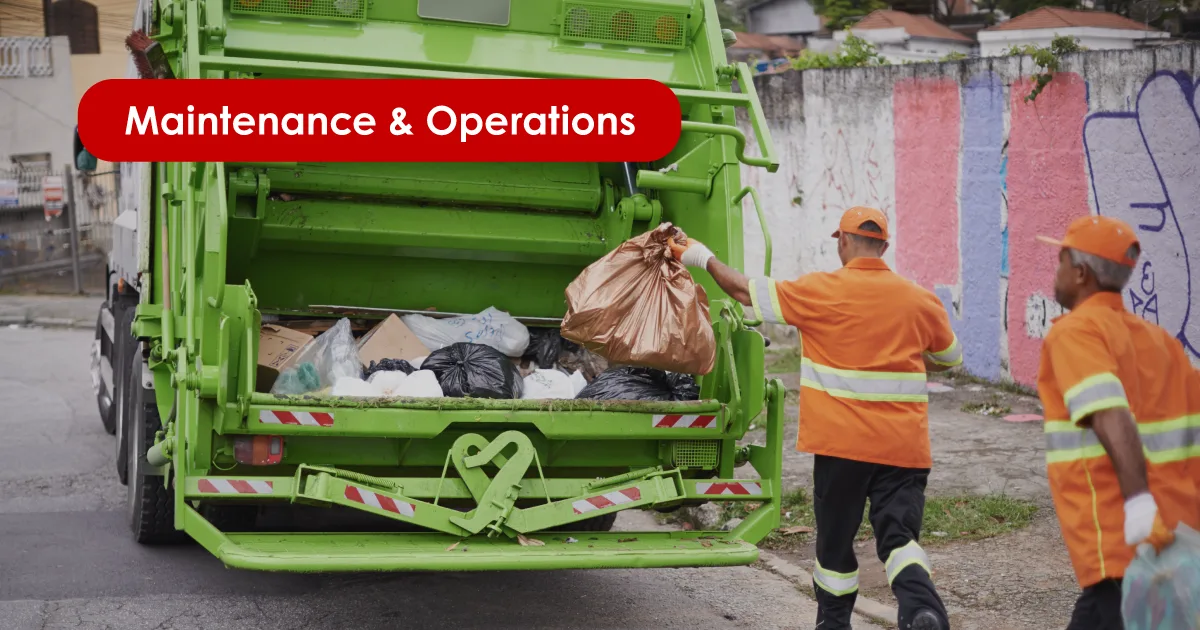
Managing a waste collection vehicle fleet represents a constant challenge for heavy-duty shop managers. Between the complexity of daily maintenance operations and the need to maintain seamless service, ensuring efficient truck maintenance becomes crucial.
Waste collection imposes a demanding pace: frequent stops, load and unload cycles, seasonal constraints, and abrasive environments. Wear is accelerated, and breakdowns have a direct impact on service continuity. This is where preventive maintenance comes in, providing invaluable value in efficiency, safety, and profitability.
Why Preventive Maintenance Is Critical in Waste Collection
Preventive maintenance involves planning inspections and interventions at defined intervals, based on mileage, engine hours, calendar, or operating conditions, rather than waiting for a breakdown to occur. In an industry where every truck out of service disrupts routes and customers, being proactive this way offers concrete benefits.
Concrete Benefits for Heavy-Duty Collection Trucks
Reduced Unplanned Downtime
By detecting anomalies earlier, the team prevents minor problems from becoming major breakdowns. Several studies show that fleets adopting this structured approach can reduce unplanned downtime by 20 to 30%. Units stay available longer and fleet maintenance planning becomes more stable.
Extended Vehicle Lifespan
Regular, structured maintenance limits premature wear on critical components and maintains unit reliability over time. By performing regular checks, managers identify and resolve minor issues before they become critical.
Enhanced Safety and Compliance
Regular inspections support safety objectives, reduce risks related to mechanical condition, and facilitate demonstrating compliance through well-maintained documentation. Additionally, building such a program (PMP), when recognized by government authorities, can exempt your heavy trucks trucks from mandatory periodic mechanical inspections, a considerable advantage when audit time comes.
Key Elements of an Effective Preventive Maintenance Program
Usage-Based Planning
The key to success lies in developing a maintenance schedule based on indicators such as operating hours, kilometers/miles traveled, and vehicle operating conditions. This scheduling makes it possible to spread out interventions and ensure each vehicle is inspected at logical intervals based on actual use.
Structured Intervention Tracking
A complete history per unit facilitates analysis, decision-making, and anticipation of recurring risks. The real-time history of each vehicle becomes an encyclopedia of all mechanical maintenance performed over time.
Performance-Driven Management
A few well-chosen maintenance KPIs, such as downtime frequency, repair timelines, and recurrence by system, are sufficient to adjust the program and prioritize actions. A centralized dashboard makes tracking these indicators straightforward.
Team Involvement and Training
The success of a preventive maintenance program depends on the involvement and training of the entire maintenance team. Mechanics need to understand the importance of each step in the process and how to use the digital tools available.
The Role of Fleet Maintenance Software in a Waste Collection Fleet
In a collection fleet, the challenge isn’t just maintaining vehicles: it’s coordinating, prioritizing, and documenting. Adopting digital solutions like MIR-RT dramatically simplifies the planning, execution, and monitoring of maintenance tasks. A fleet maintenance management software designed for the shop helps:
- Plan maintenance based on each vehicle’s actual usage
- Manage work orders and unit status in real time
- Centralize documentation of interventions, parts, and history
- Generate reports to track costs and trends
- Manage parts inventory and anticipate future needs
It is essential to choose software that offers features tailored to the specific needs of waste collection fleets. While some generic maintenance software covers both buildings and fleets, these solutions often lack the advanced features of systems designed specifically for heavy vehicle maintenance.
How Preventive Maintenance Simplifies Daily Operations
More Stable Productivity
When trucks are available, teams spend less time reorganizing routes and service is more consistent. A fleet that is proactive with preventive maintenance minimizes disruptions.
Better Cost Control
Prevention reduces the frequency of emergency repairs and enables better planning of parts and labor. This translates into better long-term maintenance cost control.
Better Cost Control
A better-maintained fleet absorbs activity peaks and operational adjustments without compromising service continuity.
Field Testimony: The Impact on Daily Management
“What I like most about the MIR-RT system is the wealth of information I can access, from the mechanic’s work order to unit management with manuals and purchase dates. It’s what allows me to see clearly where we’re headed […] to ultimately make the best possible decisions and offer the best service to our clients.”
Jacinthe Fortin, Director of Operations Services, Groupe Bellemare
Where to Start Building a Preventive Program?
Involve the shop team: success depends on adoption, data entry rigor, and consistency in inspections.
Choose the right maintenance management software: a tool built for the shop and heavy-duty fleet simplifies planning, execution, and traceability while centralizing maintenance history.
Adjust continuously: a preventive program evolves based on field feedback and observed data: recurring breakdowns, seasonal constraints, and parts availability.
Conclusion
In the waste collection industry, preventive maintenance is a direct lever for availability, compliance, and operational efficiency. By combining a structured program, reliable data, and heavy equipment maintenance software, managers gain control and operations gain stability.
Want to Improve the Availability of Your Collection Trucks?
Discover how MIR-RT can structure your preventive maintenance program, centralize your interventions, and give you clear visibility into your fleet’s condition.