

Key Takeaways
- Maintenance KPIs are essential for driving performance in heavy-duty vehicle and equipment fleets.
- They help reduce costs, improve asset availability, and support data-driven operational decisions.
- Without reliable data, it is impossible to sustainably optimize fleet maintenance management.
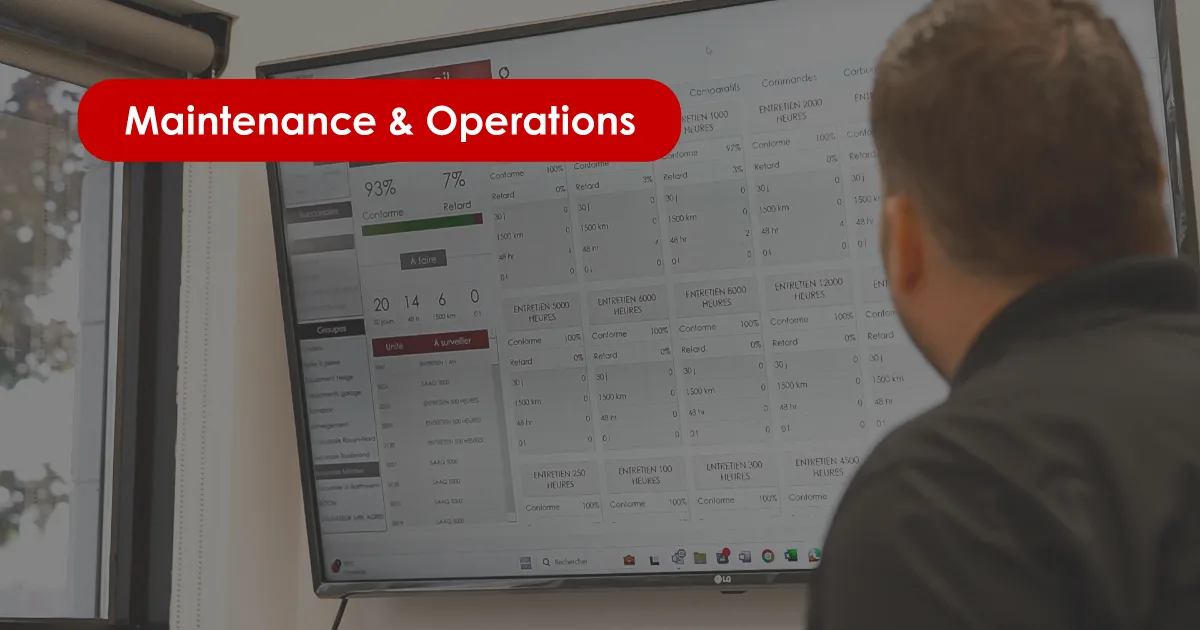
- A centralized dashboard, like the one available in MIR-RT, makes it easy to track and analyze these metrics daily.
Effectively managing a heavy-duty vehicle and equipment shop requires much more than technical expertise. Maintenance managers must rely on key performance indicators (KPIs) to get a clear overview and make the best decisions. These metrics help reduce costs, optimize resources, and keep the fleet operational.
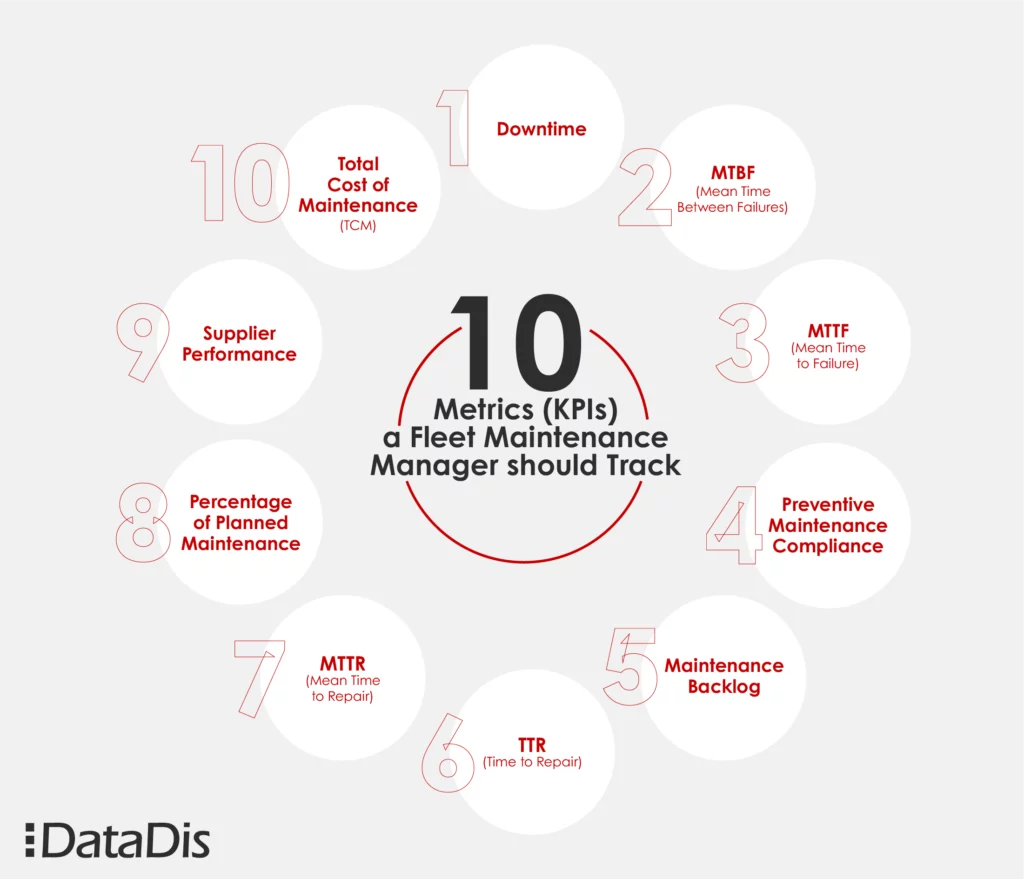
Here are 10 essential maintenance KPIs that every fleet manager should monitor closely.
1. Downtime
Downtime measures the period during which a vehicle or piece of equipment is out of service for maintenance. This period represents a direct loss of revenue, as a stopped asset generates no value. For example, a heavy truck immobilized for an emergency repair won’t be able to meet its delivery deadlines, impacting not only the customer but also the company’s overall profitability.
With fleet maintenance management software like MIR-RT, it is possible to track unit status in real time and identify the main causes of the longest downtimes. Regular analysis helps prioritize actions to reduce fleet downtime, particularly by optimizing spare parts management or strengthening preventive maintenance.
2. MTBF (Mean Time Between Failures)
MTBF is an indicator of your fleet’s overall reliability. It corresponds to the average time between two breakdowns of a vehicle or piece of heavy equipment. A higher MTBF reflects a well-maintained fleet with equipment that performs consistently over time.
This KPI is particularly useful for assessing whether your preventive maintenance intervals are well-adjusted. If the MTBF is consistently lower than expected intervals, this may indicate that certain parts or components are wearing out faster than anticipated. Using this metric, you can adjust your maintenance strategies to prevent failures.
3. MTTF (Mean Time To Failure)
MTTF often complements MTBF. While the latter focuses on the duration between two repairable failures, MTTF focuses on the average lifespan before an irreversible failure requiring replacement.
By analyzing this data, maintenance managers can better plan their purchases and budget. For example, if a piece of equipment is approaching the end of its estimated lifespan according to MTTF, it may be wise to anticipate its replacement to avoid costly repairs or unplanned interruptions. When it comes to making important decisions, leveraging data at your disposal is a considerable advantage over relying on intuition alone.
4. Preventive Maintenance Compliance
Preventive maintenance compliance indicates whether regular maintenance is carried out on time, based on days, distances traveled, or usage (engine hours). This KPI is often expressed as a percentage.
High compliance (above 90%) shows that the shop is proactive in fleet maintenance management, reducing the risk of unplanned breakdowns. For example, if a heavy vehicle is not maintained on time, it can accelerate the wear of critical components such as brakes or the engine. By monitoring this KPI, you can identify bottlenecks in your maintenance planning and adjust schedules to ensure all maintenance is completed on time.
5. Maintenance Backlog
The backlog represents the accumulation of pending maintenance tasks. The higher this number, the more it may indicate that your shop is overloaded or poorly organized. You can compare this metric to your to-do list.
A high volume may signal a lack of resources, poor prioritization, or ineffective work order management planning. Tracking this indicator helps balance the workload and identify blockers in shop operations.
6. TTR (Time to Repair)
Repair time measures the duration required to fix a specific breakdown. Detailed analysis helps identify the types of interventions that take the longest and implement targeted improvements to shop processes.
This indicator is particularly useful when cross-referenced with VMRS codes, as it reveals which systems or components require the most labor time.
7. MTTR (Mean Time To Repair)
MTTR provides an overview of repair speed over a given period. It reflects the overall efficiency of the heavy-duty shop.
A high MTTR may reveal problems with planning, parts availability in inventory, or human resources. By tracking this maintenance KPI over time, managers can measure the impact of process improvements.
8. Percentage of Planned Maintenance
Ideally, the majority of interventions should be planned rather than reactive. A high ratio of planned maintenance reduces emergencies, improves cost management, and optimizes workforce utilization.
A range of 75 to 85% planned maintenance is generally healthy and realistic for a well-managed organization. Highly mature organizations can aim for 85 to 90%, but reaching 100% is neither realistic nor necessary, since there will always be unforeseen breakdowns, damage, and urgent interventions.
The commonly used benchmark in maintenance management is the 80/20 ratio: 80% planned work and a maximum of 20% unplanned work.
Planned maintenance not only avoids costly interruptions but also enables more effective cost and labor management. This indicator directly reflects the maturity of fleet maintenance management processes within your organization.
9. Supplier Performance
Parts availability and reliability are directly tied to the success of a heavy vehicle and equipment shop. It is essential to constantly evaluate supplier performance based on delivery speed, parts quality, and adherence to negotiated pricing.
A poor supplier can have significant consequences on your operations, causing additional delays and increasing costs. It is wise to document any shortcomings from your suppliers to have leverage during future price negotiations or agreements.
10. Total Cost of Maintenance (TCM)
Total cost of maintenance includes expenses related to labor, parts, and losses associated with downtime. The formula is straightforward: TCM = labor costs + parts costs + downtime costs.
By analyzing this financial metric, you can detect sources of excessive spending and explore solutions to reduce your costs. This KPI is easily comparable year over year, but it is important to account for fluctuations in fleet size, as they directly impact the calculation. To track the evolution of your costs on a comparable basis, you can divide your TCM by the number of units to get a maintenance cost per asset.
Conclusion
By integrating these 10 maintenance KPIs into your daily management, you will be able to make better decisions that improve the availability of your heavy vehicles and equipment, reduce costs, and maximize customer satisfaction.
With tools like the MIR-RT dashboard, tracking these maintenance KPIs becomes accessible, allowing you to focus on what matters most: keeping your fleet running efficiently.
Want to Centralize Your Maintenance KPI Tracking?
Discover how MIR-RT helps you build a maintenance dashboard to drive the performance of your heavy vehicle and equipment fleet.