

Key Takeaways
- Poor inventory management in a heavy-duty shop increases downtime and ties up capital unnecessarily.
- Inventory management software integrated into fleet maintenance management software improves parts availability, reduces errors, and speeds up repairs.
- Features like automated reordering (min/max), barcode scanning, and work order integration make a real difference daily.
- Best practices like the ABC method, regular physical counts, and tracking maintenance KPIs strengthen long-term performance.
Effective inventory management is essential to the smooth operation of a heavy-duty vehicle repair shop. Without a well-organized system, garages may face stockouts, overstocking costs, and inevitably significant financial losses. Implementing heavy equipment maintenance software that includes inventory management solves these problems while improving productivity and profitability.
In this article, we’ll explore the must-have features of such software as well as best practices for optimizing your parts inventory management.
Why Optimized Inventory Management Is Crucial for Heavy-Duty Shops
You already know this: in the heavy vehicle repair business, time is money. A simple delay in parts availability can lead to extended downtime, unhappy customers, and lost revenue. Conversely, excess stock unnecessarily ties up capital and storage space.
A well-designed inventory management system ensures that the right parts are available at the right time, maintaining a balance between cost and availability.
Key benefits include reduced fleet downtime through better parts availability, lower costs by avoiding overstocking, improved stock accuracy through automation, and increased customer satisfaction through faster repairs.
The Operational Risks of Poorly Structured Inventory
Without a structured inventory system, heavy-duty shops face frequent stockouts, expensive emergency purchases, surplus obsolete parts, lack of visibility across branches, and prolonged repair times.
These inefficiencies directly affect vehicle availability and overall maintenance performance. Optimizing inventory management for heavy duty parts supports downtime reduction strategies by ensuring the right parts are available at the right time.
Shops that treat inventory as a strategic function outperform those operating reactively.
Must-Have Features of Inventory Management Software for Heavy-Duty Fleets
1. Real-Time Parts Tracking
Having a real-time view of inventory allows you to accurately track stock levels and anticipate parts needs. With this rigorous control, it becomes possible to detect usage trends and make data-driven purchasing decisions.
Good to know: if a part is frequently used in repairs, the system can send an automatic alert before it goes out of stock.
2. Automated Reordering System
Manual stock control is often error-prone and time-consuming. An automated reordering system uses minimum and maximum stock thresholds to automatically trigger replenishment orders. By using this system as a safety net, you dramatically reduce the risk of parts shortages while still being able to place manual orders at any time.
Good to know: the MIR-RT software can automatically generate internal and external orders when certain parts reach their critical threshold.
3. Barcode and RFID Label Integration
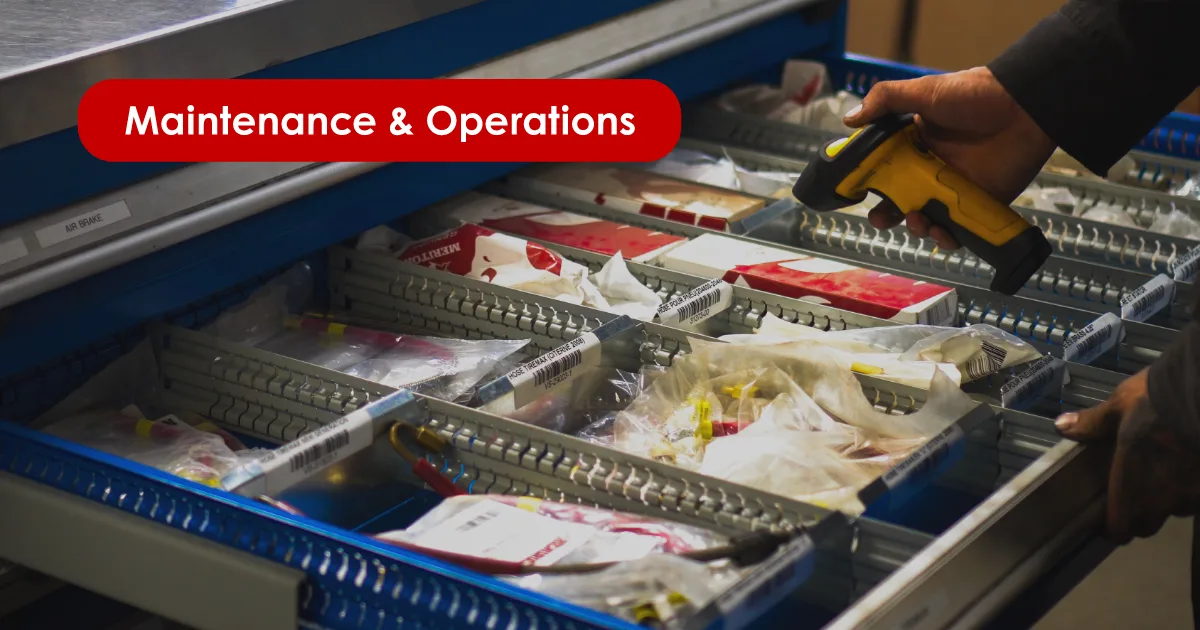
Using barcodes or RFID technology allows you to scan parts upon receipt and automatically update inventory. This reduces human errors and speeds up inventory counts. Additionally, your mechanics’ work is greatly simplified when picking parts from the warehouse: they simply scan the necessary parts instead of manually entering them into their work order.
Good to know: MIR-RT features barcode scanning functionality that simplifies inventory adjustments and enables more precise management.
4. Integration With Fleet Maintenance Management Software
An inventory system should never operate in isolation. Its integration with a maintenance management system ensures alignment between work orders, parts usage, preventive maintenance planning, and purchasing.
Platforms like MIR-RT centralize inventory and maintenance data in a single environment, eliminating silos and strengthening operational control. When inventory data is synchronized with work order management, purchasing, and preventive maintenance, operational visibility improves significantly.
5. Multi-Branch Management
For organizations operating multiple shops, centralized visibility reduces inventory duplication and ensures consistent management across different divisions. It becomes possible to transfer parts between branches and compare stock levels at a glance.
Best Practices for Optimizing Inventory and Reducing Downtime
Conduct Regular Physical Inventory Counts
Even with automation, periodic checks ensure data integrity. These counts help correct discrepancies between digital inventory and physical reality.
Use Demand Forecasting
Analyzing historical trends helps anticipate seasonal needs and reduce emergency purchases. Fleet maintenance management software that retains parts consumption history greatly facilitates this analysis.
Strategically Classify Parts Using the ABC Method
The ABC method improves control over high-value parts (Category A) while simplifying the management of low-value, high-volume parts (Category C). This classification helps focus management effort where the financial impact is greatest.
Track Maintenance KPIs
Indicators such as inventory turnover rate, stockout frequency, and cost per work order are among the maintenance KPIs to monitor for improving performance. A centralized dashboard makes tracking these metrics straightforward.
Evaluate Supplier Performance
The reliability of your suppliers directly impacts parts availability. Tracking delivery times, parts quality, and adherence to negotiated pricing helps build stronger partnerships and limit disruptions.
Conclusion
Inventory management in a heavy-duty shop is a strategic performance driver for fleet maintenance. By combining structured processes with integrated fleet maintenance management software like MIR-RT, shops can reduce fleet downtime, control inventory costs, and improve operational efficiency.
Ready to Optimize Your Inventory and Maintenance Operations?
Discover how the MIR-RT inventory module can centralize your data, automate your orders, and strengthen your heavy vehicle operations.