


Key Takeaways
- Work orders are the backbone of heavy-duty vehicle and equipment maintenance operations.
- Digital work order management improves visibility, cost control, and preventive maintenance planning.
- Integrated into fleet maintenance management software like MIR-RT, work orders become a strategic performance lever rather than a simple administrative task.
- Using standardized data such as VMRS codes improves reporting and maintenance KPI tracking.
Mechanic work orders are an essential part of proper fleet maintenance. Improving the work order management process in your company will significantly improve maintenance efficiency. Maintenance managers should consider different ways to optimize this process within their organization.
In this guide, we’ll explain what mechanic work orders are, describe the management process, and present what a good work order template should include. Finally, we’ll discuss the importance of having a powerful work order management software.
What Is a Work Order?
A work order is a document (paper or digital) that integrates all important data regarding a maintenance task. It describes the process necessary to complete the work and includes information such as overall job details, repair date, the name of the person who authorized it, the assigned mechanic’s name, unit number, work order type (internal or external), and parts used.
Work orders help mechanics and maintenance managers organize, prioritize, complete, and track the work they perform. Once completed, they are saved and analyzed to improve shop efficiency.
Work orders are at the center of your fleet’s maintenance operations. They guide your maintenance team and help managers better plan the workload for the weeks ahead. This is why it’s very important to have a good tool to manage them effectively and proactively.
A good work order management system must include a dashboard providing an overview of important information and reports for analyzing shop performance.
The Work Order Management Process With Fleet Maintenance Software
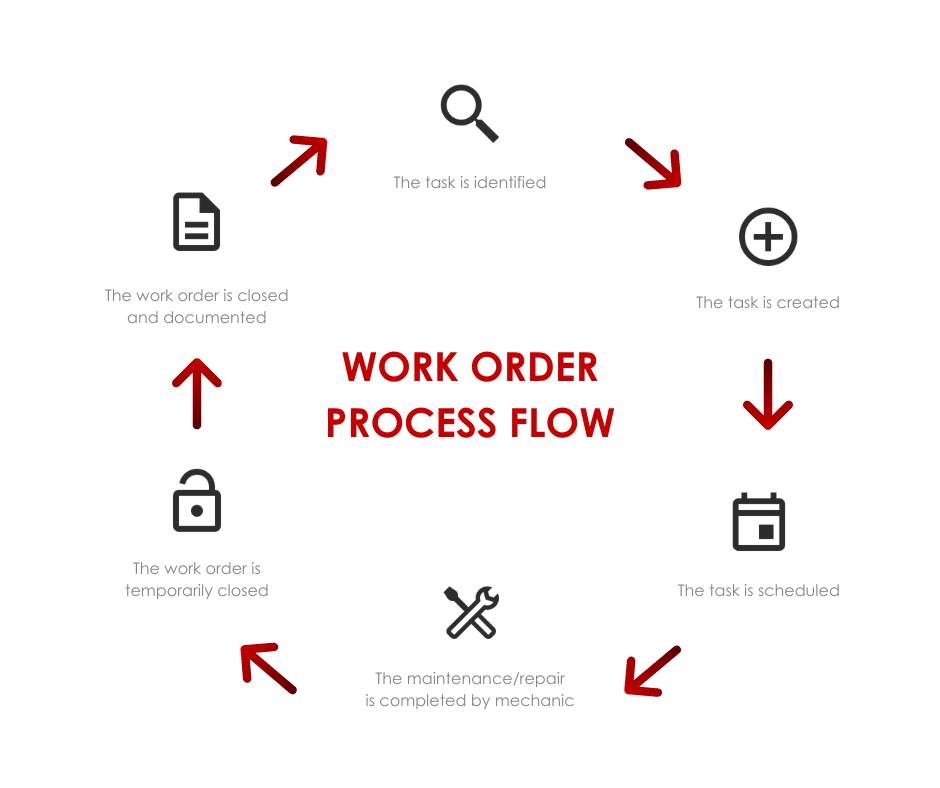
Step 1: The Task Is Identified
Tasks are classified as preventive or corrective. Preventive maintenance is triggered based on mileage, engine hours, or an established schedule using the planning module. Corrective maintenance results from a breakdown, a defect reported by a driver via MIRCheck or MIRNote, or a mechanical inspection.
Each task is associated with a specific unit in the system.
Step 2: The Task Is Created
The request is created directly in the maintenance management system. Using standardized classifications like VMRS codes ensures reporting consistency and facilitates long-term data analysis.
Step 3: The Task Is Planned and Assigned
The supervisor assigns the task to an internal mechanic or external vendor. Digital planning boards in the real-time manager facilitate resource allocation and improve shop efficiency.
Step 4: The Task Is Completed by the Mechanic
The mechanic starts the task in the system via the mechanic mode. Time is automatically recorded, and parts used are added to the work order. When inventory is integrated, stock levels are updated in real time.
Step 5: The Work Order Is Reviewed and Validated
The supervisor verifies hours, parts, and documentation before validating the intervention. This step is essential for maintaining data quality and reliable maintenance KPIs.
Step 6: The Work Order Is Closed and Archived
The work order is officially closed and integrated into the unit’s maintenance history. This data will be used for future analysis and optimization of preventive maintenance.
What Information Should a Work Order Include?
To ensure compliance and cost tracking, a digital work order should include the unit number and asset type, work order type (preventive or corrective), assigned mechanic or vendor, VMRS reason and repair codes, a detailed problem description, a summary of work performed, parts and materials used, labor hours and costs, creation and closure dates, and attached documents or photos.
This structure enables precise tracking of maintenance KPIs and facilitates long-term analysis.
Why Work Order Management Software Is Essential
Paper work orders limit visibility and create administrative delays. Information must be entered, filed, and retrieved manually. Digital management centralizes data and provides real-time visibility into operations.
Fleet maintenance management software like MIR-RT allows you to track open, pending, and completed work orders, measure average repair times, identify bottlenecks related to parts or approvals, analyze workload by branch, and track maintenance costs per unit.
Essential features of a good work order management software include centralized work order management, preventive and corrective maintenance planning, real-time integration with inventory, time and cost tracking, complete asset history, dashboards and performance reports, integration with telematics and accounting, and secure cloud-based access.
Best Practices for Optimizing Work Order Management
To maximize the value of your maintenance management software:
Ensure consistent use of standardized codes: VMRS codes guarantee data quality and facilitate comparisons between units and across periods.
Train teams on daily processes: mechanics, supervisors, and managers must understand the importance of properly documenting each intervention.
Regularly monitor performance indicators: maintenance KPIs such as MTTR, backlog, and percentage of planned maintenance help identify improvement opportunities.
Integrate work orders with inventory and inspections: data synchronization between modules eliminates silos and improves accuracy.
Use dashboards to identify gaps: an operational overview enables proactive action rather than reactive problem-solving.
Clean data and structured processes are essential for maintaining long-term performance.
Conclusion
Work orders are the foundation of effective heavy-duty vehicle and equipment maintenance management. A structured digital system improves planning, execution, reporting, and cost control.
Integrated into fleet maintenance management software like MIR-RT, work orders become a strategic lever for performance and reducing fleet downtime.
Ready to Modernize Your Work Order Management?
Discover how the MIR-RT work order module can effectively structure your maintenance operations.