

Key Takeways
- The International Roadcheck 2026 runs May 12–14, 2026 across North America, organized by the CVSA.
- Focus areas: ELD tampering (driver) and cargo securement (vehicle).
- In 2025, 18.1% of vehicles inspected were placed out of service. Brakes accounted for over 40% of violations.
- MIR-RT supports year-round compliance, while MIRCheck enables electronic circle checks that meet DVIR software requirements.
What Is the International Roadcheck 2026?
The International Roadcheck 2026 is the North American commercial vehicle inspection initiative running May 12–14, 2026. Over 72 hours, thousands of CVSA-certified inspectors conduct intensive inspections at weigh stations and inspection sites across Canada, the United States and Mexico.
According to the CVSA, nearly 15 vehicles are inspected every minute throughout the event. The vast majority of inspections follow the North American Standard Level I Inspection, a 37-step procedure covering both driver and vehicle.
What Are the 2026 Priority Focus Areas?
Drive Focus : ELD Tampering and Falsification
The 2026 driver focus is on the tampering, falsification or manipulation of electronic logging devices (ELDs). Inspectors will review each driver’s record of duty status for altered or inaccurate entries intended to conceal hours-of-service violations.
In 2025, falsification of the record of duty status was the second most-cited driver violation, with 58,382 infractions recorded.
Vehicle Focus: Cargo Securement
Improperly secured cargo compromises vehicle maneuverability and poses a risk to other road users. In 2025, more than 18,000 violations were issued for cargo not secured against leaking, spilling, blowing or falling, and more than 16,000 additional violations for unsecured vehicle components or dunnage.
Why This Event Matters for Fleet Operators
The 2025 CVSA data speaks for itself: the vehicle out-of-service rate was 18.1%, meaning nearly one in five vehicles inspected was placed out of service on the spot. Brake systems alone accounted for more than 40% of those violations.
An out-of-service order means delayed deliveries, financial losses and added pressure on the rest of the fleet. Beyond Roadcheck week, a non-compliant vehicle can be placed out of service at any time. Out-of-service criteria are updated annually on April 1.
A well-maintained fleet also protects your safety rating and your reputation with clients.
What Are the Key Inspection Points Before May 12?
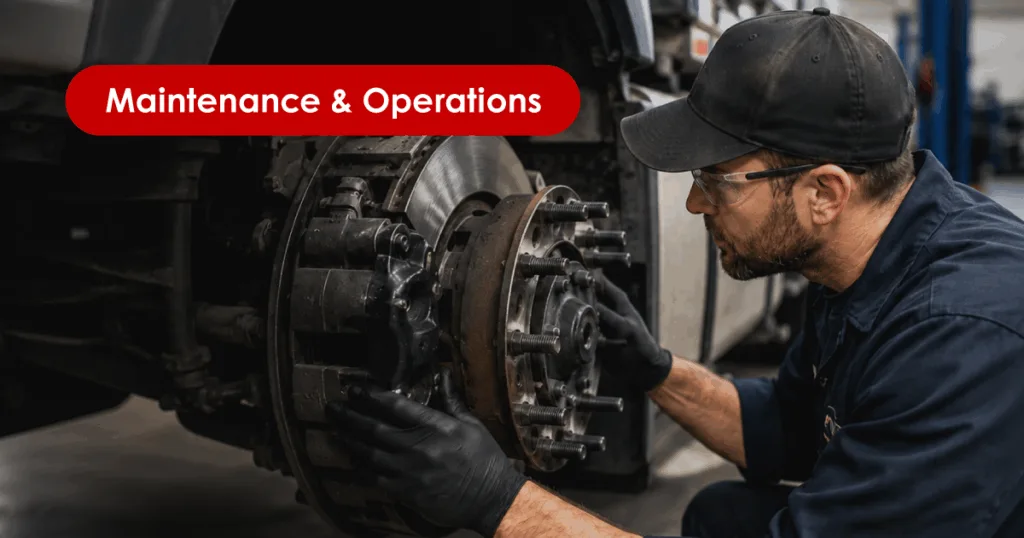
Brake systems. Leading cause of out-of-service orders year after year. Verify operation, wear and compliance.
Cargo securement. Tie-downs, restraint devices, dunnage and complete securement systems, per FMCSA requirements.
Tires. Pressure, tread depth, visual condition. Second leading cause of out-of-service violations in 2025 (2,899 recorded).
Lighting and signals. Headlights, marker lights, brake lights, turn signals, clearance lights. Easy to fix, often overlooked.
Electronic logging devices (ELDs). Ensure drivers understand ELD regulations and that no entries have been modified without proper annotation.
Driver documentation and qualifications. Licenses, medical certificates, Drug and Alcohol Clearinghouse status (US).
Required safety equipment. Fire extinguishers, reflective devices and other regulated safety equipment.
How to Prepare Your Fleet for Roadcheck 2026
Schedule Internal Inspections in Advance
Do not wait until the final week. The best-prepared fleets keep their vehicles compliant year-round rather than treating the Roadcheck as an exceptional event.
Digitize Your Pre-Trip Inspections
The driver vehicle inspection report (DVIR) is a daily obligation. A digital vehicle inspection ensures nothing is overlooked and creates a searchable history for use during a roadside inspection. A fleet inspection app like MIRCheck allows drivers to perform their electronic circle check on mobile, complete with photo evidence and automatic transmission to the maintenance team.
Train Your Drivers
Brief your drivers on proper ELD usage, cargo securement requirements and appropriate conduct during a roadside inspection.
Maintain a Documented Preventive Maintenance Program
Preventive maintenance for heavy-duty vehicles is the foundation of a compliant fleet. A structured maintenance schedule allows you to catch deficiencies before they become violations.
MIR-RT: Heavy Equipment Maintenance Software for Year-Round Compliance
Managing heavy equipment maintenance manually quickly becomes complex. A CMMS for heavy equipment like MIR-RT lets you:
- Schedule preventive maintenance with alerts before critical deadlines
- Centralize work order management and full vehicle history
- Optimize inventory management for heavy duty parts
- Track maintenance KPIs to reduce fleet downtime
- Maintain complete documentation accessible during inspections
The goal is not to prepare once a year, but to maintain continuous compliance that makes the Roadcheck just another week.
Conclusion
With a focus on ELD falsification and cargo securement, and an out-of-service rate approaching 20%, the stakes for Roadcheck 2026 are real. Serious preparation lets you approach this period with confidence and avoid costly downtime.
Ready to bring structure to your heavy-duty fleet maintenance?
Request a MIR-RT demo and see how our heavy duty fleet maintenance software can help you reduce fleet downtime, streamline work order management and track your maintenance KPIs in real time.